Skip to content


Table of Contents
Noticing more scalp under the bathroom light, or a part that seems wider every month, is unsettling. PRP hair restoration can improve hair density and thickness for many people with early thinning, though results vary from person to person.
At Flawless Medicine, we offer both PRP and PRF as a hair loss treatment in Johnson City, TN. This guide covers whose hair tends to respond, what a realistic timeline looks like, and how long results last, so you can compare hair thinning treatment options with clear expectations.
How PRP Hair Treatment Works on Thinning Hair
PRP helps many people with thinning hair, but not everyone. Many patients using PRP for hair loss notice improvements in hair count and thickness, particularly with pattern hair loss, though results vary.
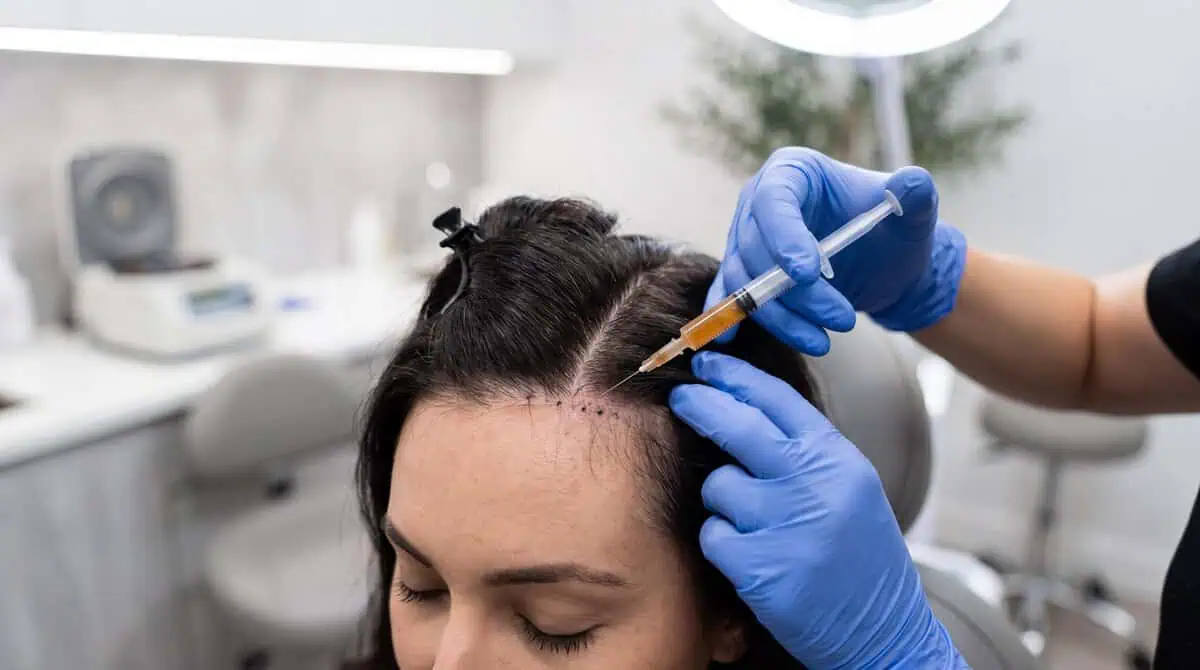
Platelet-rich plasma (PRP) is made from a small sample of your own blood, spun in a centrifuge to concentrate the platelets. When injected into thinning areas of the scalp, those platelets release growth factors that may help support weakened hair follicles. PRP for hair loss is an off-label treatment, so your provider will explain what it can and cannot do during your consultation.
Flawless Medicine also offers platelet-rich fibrin (PRF), which is prepared at a slower spin without an added anticoagulant, so it may release growth factors more gradually.
Which Types of Thinning Hair Respond Best to PRP
PRP tends to work best where hair follicles are weakened but still alive. It cannot create new follicles, so the cause and stage of your thinning shape what it can realistically do. The cause is not always obvious from the mirror, which is why a provider evaluation comes first. Our quick online self-assessment is an easy way to note your concerns before that visit.
Early Pattern Hair Loss in Men and Women
Androgenetic alopecia, better known as pattern hair loss, is the type of thinning that typically responds best to PRP. In men, it often shows up as a receding hairline or thinning at the crown. In women, it typically looks like a widening part or less volume across the top of the head. Early-stage thinning tends to respond better than loss that has progressed for many years.
Shedding After Stress, Illness, or Pregnancy
Telogen effluvium is temporary shedding that often begins a few months after a stressor such as illness, surgery, or childbirth. It often settles on its own once the trigger passes. The role of PRP here is less established, so your provider may recommend identifying the cause before starting treatment.
Advanced Baldness and Scarring Hair Loss
Smooth areas where follicles are no longer active typically show little response to PRP. Scarring alopecias, which can permanently damage follicles, need a medical diagnosis first. These conditions are generally not a fit for PRP alone.
When You Can Expect to See Results From PRP
Most people need several months to see meaningful PRP hair treatment results, because hair grows in cycles and new growth takes time to reach the surface. Some patients first notice less shedding. Visible improvements in density typically appear around the three-month mark, and providers often assess fuller results around six months.
Gradual change is hard to see day to day. Photos taken before your first session, then repeated at follow-ups with the same lighting and angles, give you an honest way to compare. They also help your provider decide whether to adjust your plan.
How Many Sessions You’ll Need and How Long Results Last
Most PRP hair protocols begin with an initial series of several sessions spaced a few weeks apart. Your provider sets the exact number and spacing at your consultation, based on your hair loss pattern and how your scalp responds.
PRP does not stop the underlying cause of pattern hair loss, which is largely driven by genetics and hormones. Without ongoing care, results usually fade gradually as the original thinning pattern continues. Maintenance sessions are commonly spaced every several months, adjusted to how well you hold your results. Think of PRP as an ongoing plan rather than a one-time fix.
What Affects How Well PRP Works for You
Your results depend mostly on why your hair is thinning and how long it has been happening, along with a few factors you can influence:
- The stage and cause of your hair loss set the starting point, and earlier thinning generally responds better.
- Your overall health plays a role, since hormonal changes, recent illness, and certain medications can all affect hair growth.
- Completing the full initial series gives PRP its best chance to work, while skipping sessions can limit results.
These factors explain why two people with similar-looking thinning can see different outcomes. Some providers also pair PRP with other physician-guided hair loss approaches, and your provider can tell you whether that makes sense for you.
PRP is also not right for everyone. People with certain blood or platelet disorders, active scalp infections, or who take blood thinners may not be good candidates. Bring your full health history and medication list to your consultation, and never stop a prescribed medication without talking to the doctor who prescribed it. You can review prep and aftercare guidance for our PRP and PRF treatments ahead of your visit.
Is PRP Hair Restoration Right for Your Thinning Hair?
PRP hair restoration tends to work best for early pattern thinning with active follicles, with changes building over several months and maintenance helping to sustain them. At Flawless Medicine, our team will look at your hair loss pattern, review your health history, and give you an honest answer about whether PRP or PRF makes sense for you. When you’re ready, explore PRP Hair Restoration for PRP hair restoration in Johnson City, TN, and we’ll walk through your options together.